Bo · ClawHunt · August 3, 2026, 18:05 · Guangdong
Many brands are still studying how to make themselves discoverable in search.
Users have already changed the action: they open Doubao, Qwen, or DeepSeek and ask directly, “How should I choose in this category?”
This means the power to explain a brand is being redistributed.
It has already done the homework. It summarizes the material, lists candidates, explains the differences, and sometimes even makes a judgment for the user. The difference is that this colleague does not work for your company and never reads your weekly report.
Its name is AI.
Search-result pages once looked like a commercial street. Brands competed for storefronts, position, and foot traffic. Now AI brings the user into a consulting room: the user describes a problem, AI lays out several paths, and along the way places a few brands into the answer.
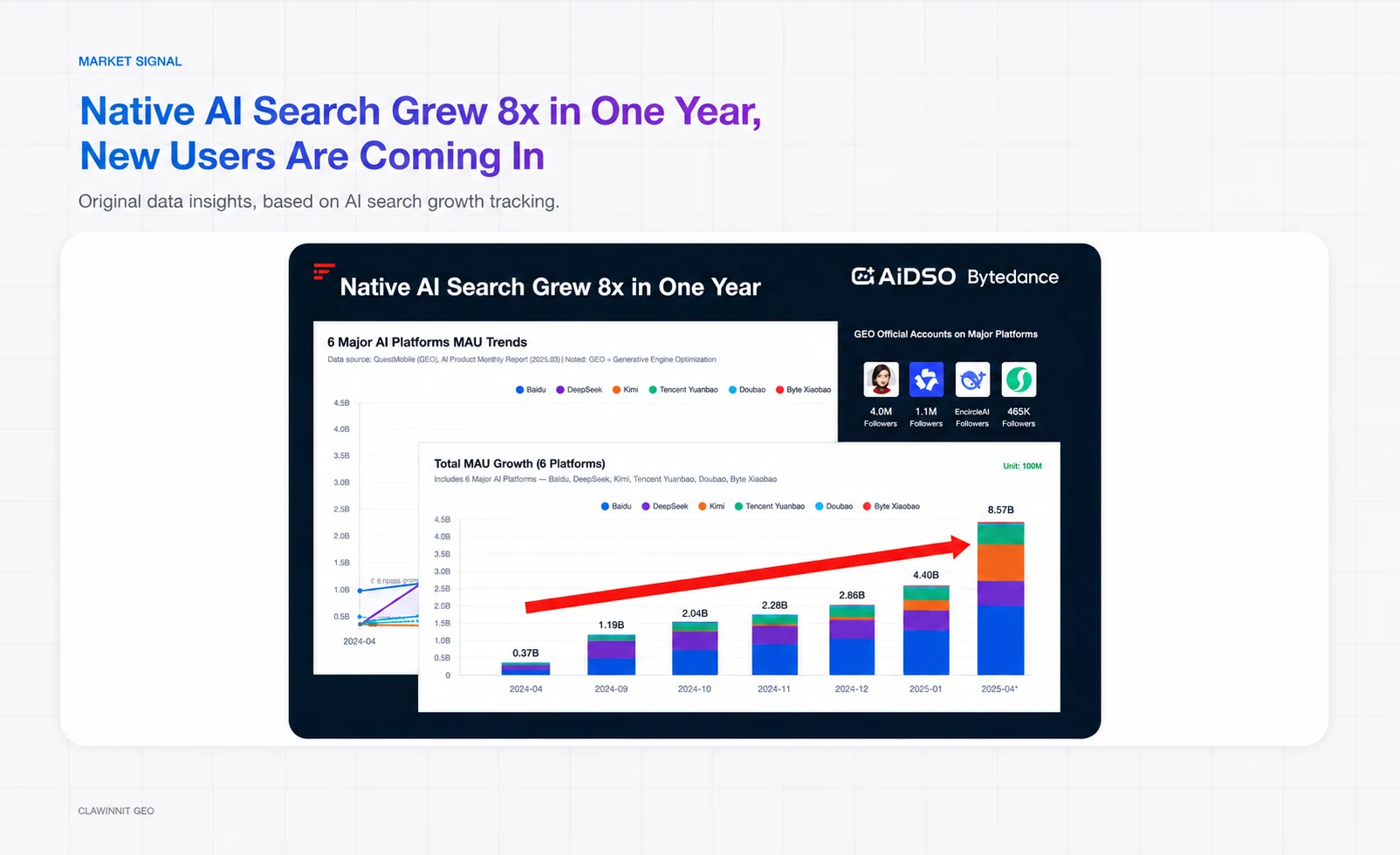
The reasons it gives and the sources it cites are already shaping the user’s first layer of trust.
The more difficult problem is that many teams still do not know what their brand looks like inside AI.
The website may be comprehensive, the official account may publish frequently, and short-video production may never stop. Yet when a user asks, “Which brand is better for beginners?”, “Who should solve this problem?”, or “What should I choose on a limited budget?”, AI may not mention you at all. Or it may mention you in a polite list beside eight competitors.
It feels a little like being added to a group chat without anyone telling you what the group is discussing.
ClawHunt GEO is designed to make that situation visible.
This article explains the method; the engagement itself is the ClawHunt GEO service.
Part 1 | Users Have Not Left Search; They Have Turned Search into a Sentence
People have always looked for answers. They used to enter keywords; now they enter complete questions. Instead of searching “noise-canceling headphone recommendations,” they are more likely to ask: “I commute for two hours, my ears hurt easily, and my budget is RMB 1,000—which model should I choose?”
A keyword is more like a road sign; a scenario is an entire route. The information density is higher, and brands enter the user’s decision process earlier.
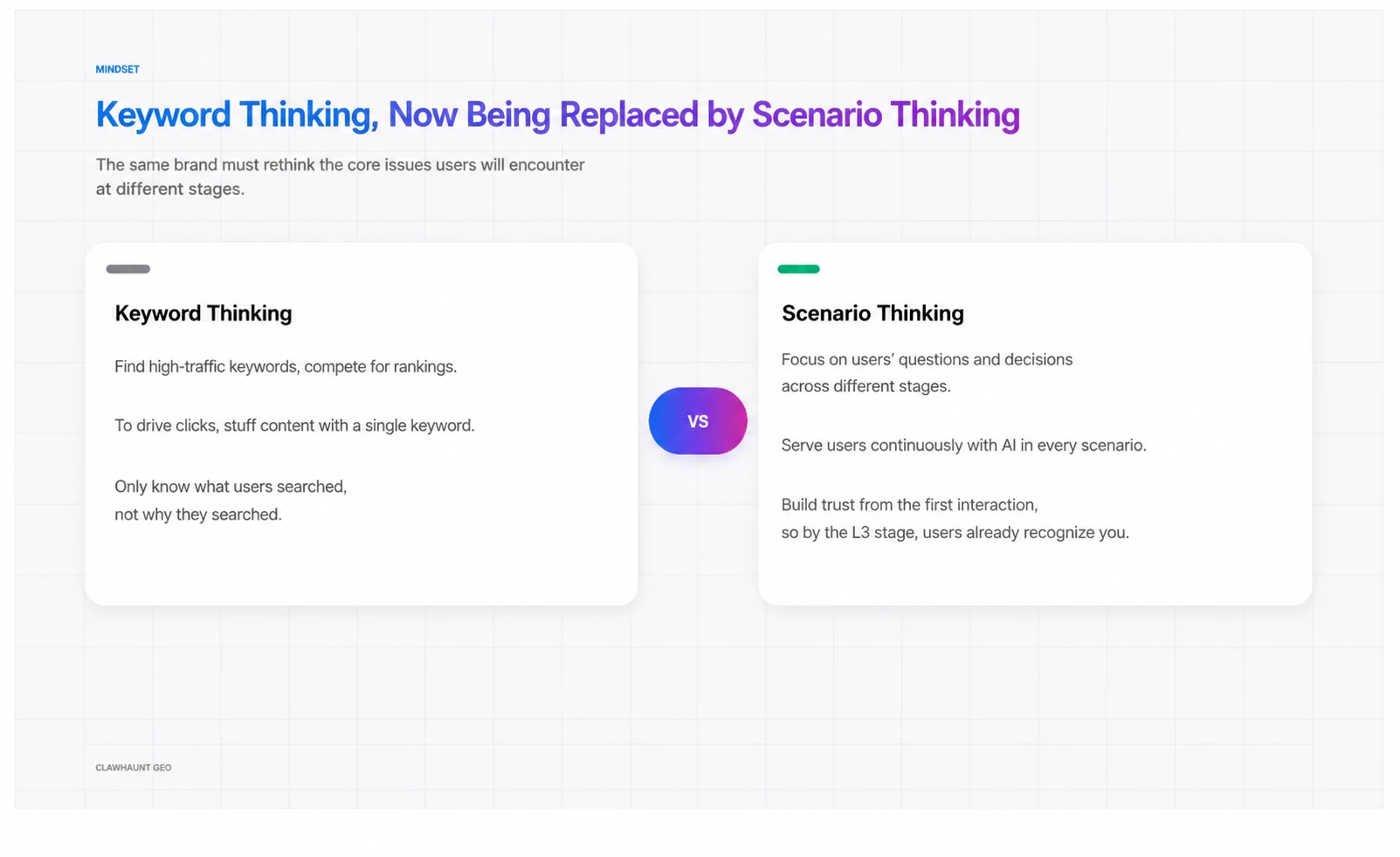
When choosing an institution or a solution, users often move through five or six consecutive rounds of questions: first deciding whether they need it, then understanding the options, comparing alternatives, and only later checking prices, appointments, and transaction details.
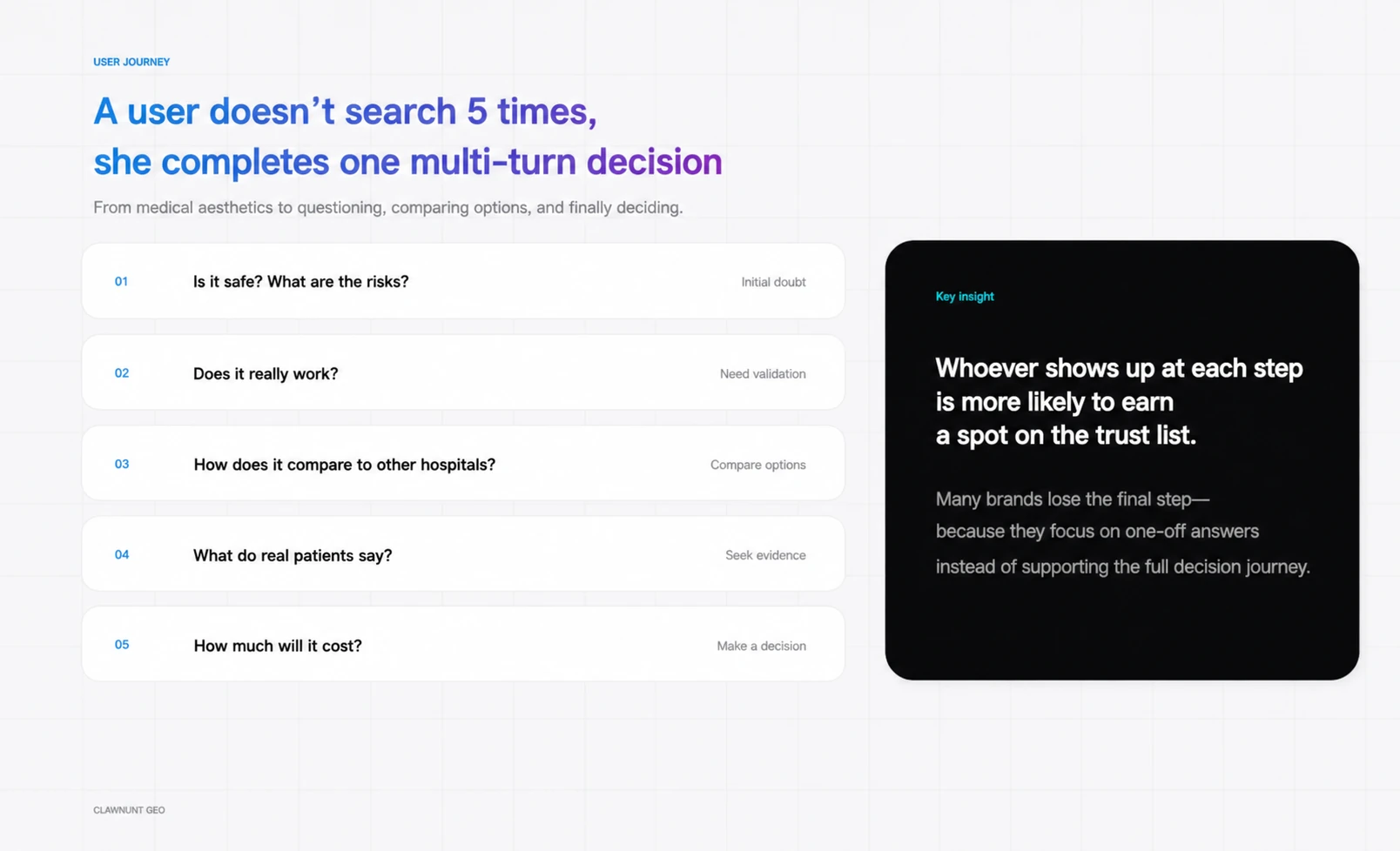
The pricing page, case studies, consultation entry point, and sales scripts may all be fully prepared. The problem is that the user has already completed a great deal of cognitive work in the earlier rounds. Which educational article helped her understand the risk? Whose comparison content gave her a standard? Which real case made her think, “This person seems like me”? These things quietly shape the choice that follows.
AI is shortening this journey.
It combines scattered material into an answer that appears complete. The user may not open each link—or even realize that she has just accepted a round of brand filtering. She simply feels: this answer understands me.
Brands need to enter this conversation earlier. Real user questions, clear professional explanations, verifiable cases, and continuously updated content were always part of the answer. AI has simply rearranged those answers.
For adjacent evidence on how users now phrase demand, see our other field notes from the agent economy.
Part 2 | AI Answers Have No Single Standard—Do Not Celebrate One Screenshot Too Soon
Suppose a user asks, “Which provider should I choose?” The answer lists A, B, C, D, and E.
Your brand appears in position C. It looks good, makes a nice screenshot, and may even be forwarded to the boss with the caption “major breakthrough.”
But the user’s next question will be: Why?
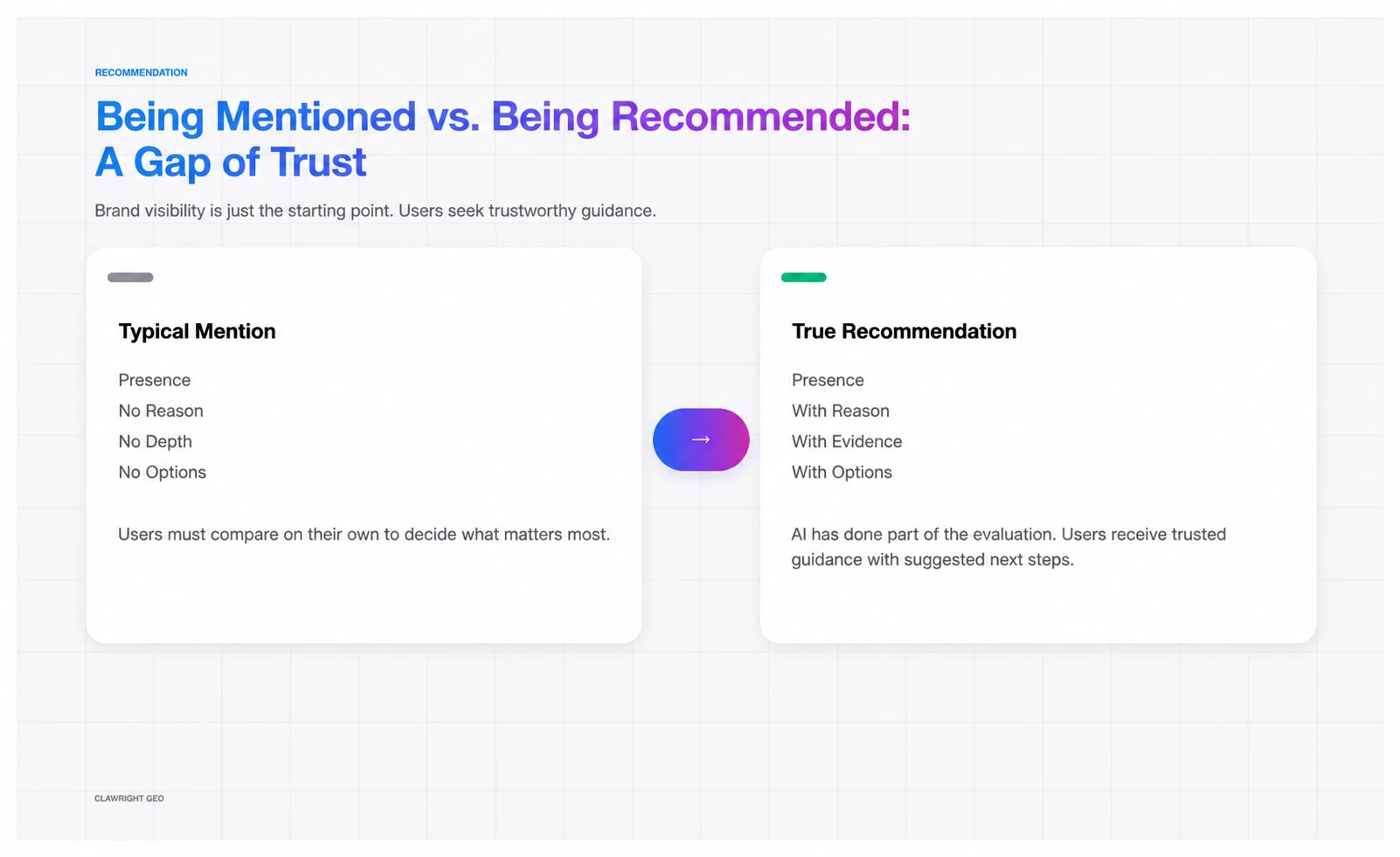
If AI cannot explain why, a brand name is only an option waiting to be compared. The user still has to search for material, read reviews, ask friends, and open more pages. For the brand, attention has been distributed—but it has not yet become trust.
A real recommendation explains the suitable scenario: the budget, need, or audience. It gives reasons for the choice, such as product capabilities, service model, case characteristics, or professional boundaries. It also leaves verifiable evidence so the user knows the judgment did not appear from nowhere.
That is the difference between being “mentioned” and being “recommended.”
Different platforms and endpoints do not share the same preferences for information sources.
Some platforms are more likely to cite public webpages; others amplify short video and community content. Some even answer like two different editorial teams on their App and Web versions.
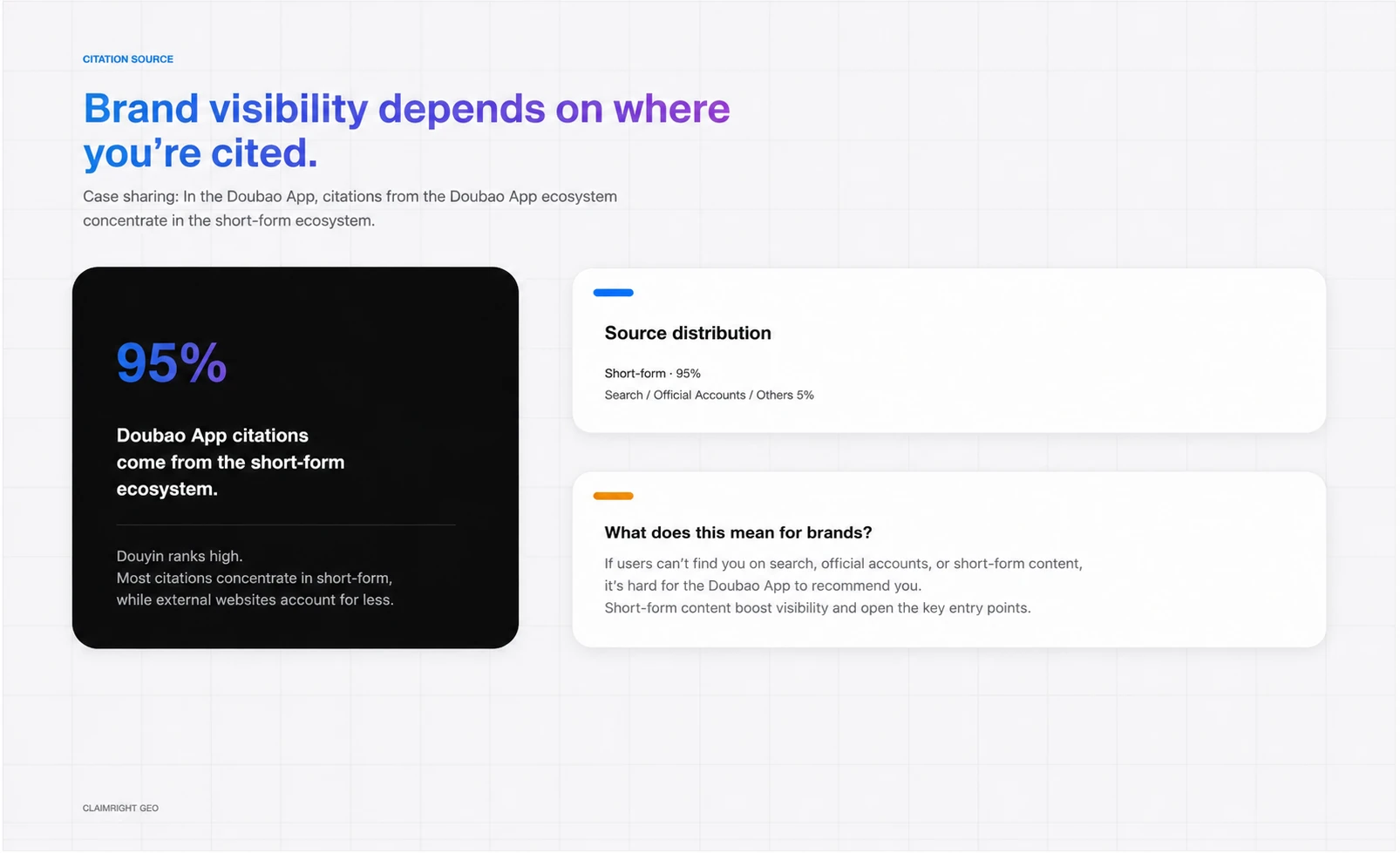
No brand is recommended across every AI platform.
A single screenshot is more like a passing weather report: it offers clues, but it cannot describe an entire season.
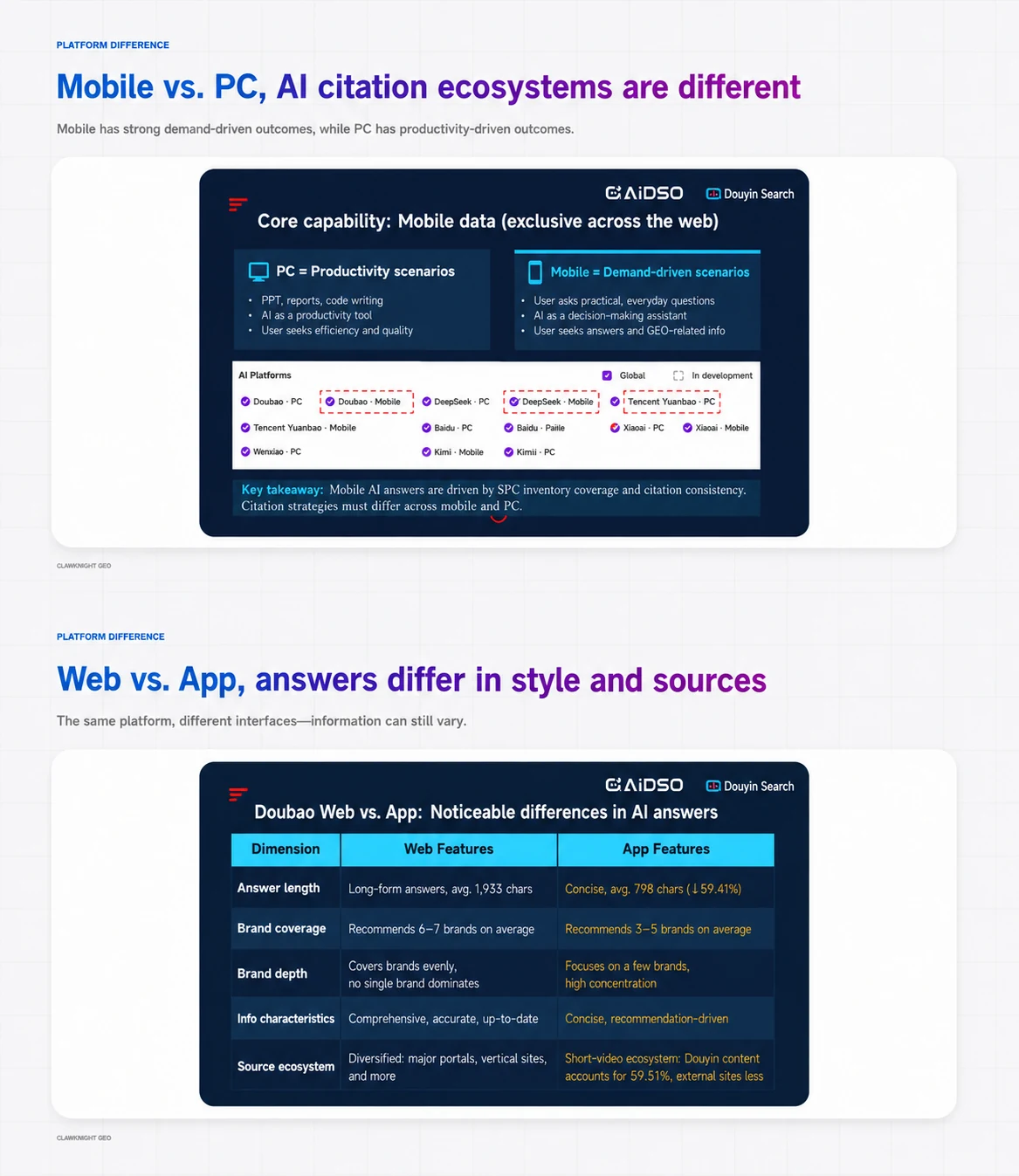
Raw answers are data.
They can fill a thick file and make a team look busy. The valuable work is returning those answers to the business context: Who is asking? Where is she in the decision journey? How does the question affect conversion? Does a competitor’s advantage come from the brand, its content, or the channel?
Without this map, optimization is like repairing a machine in a dark room with a wrench. It sounds professional, but the result depends on luck.
Part 3 | ClawHunt GEO Begins by Turning Questions into a Brand Decision Map
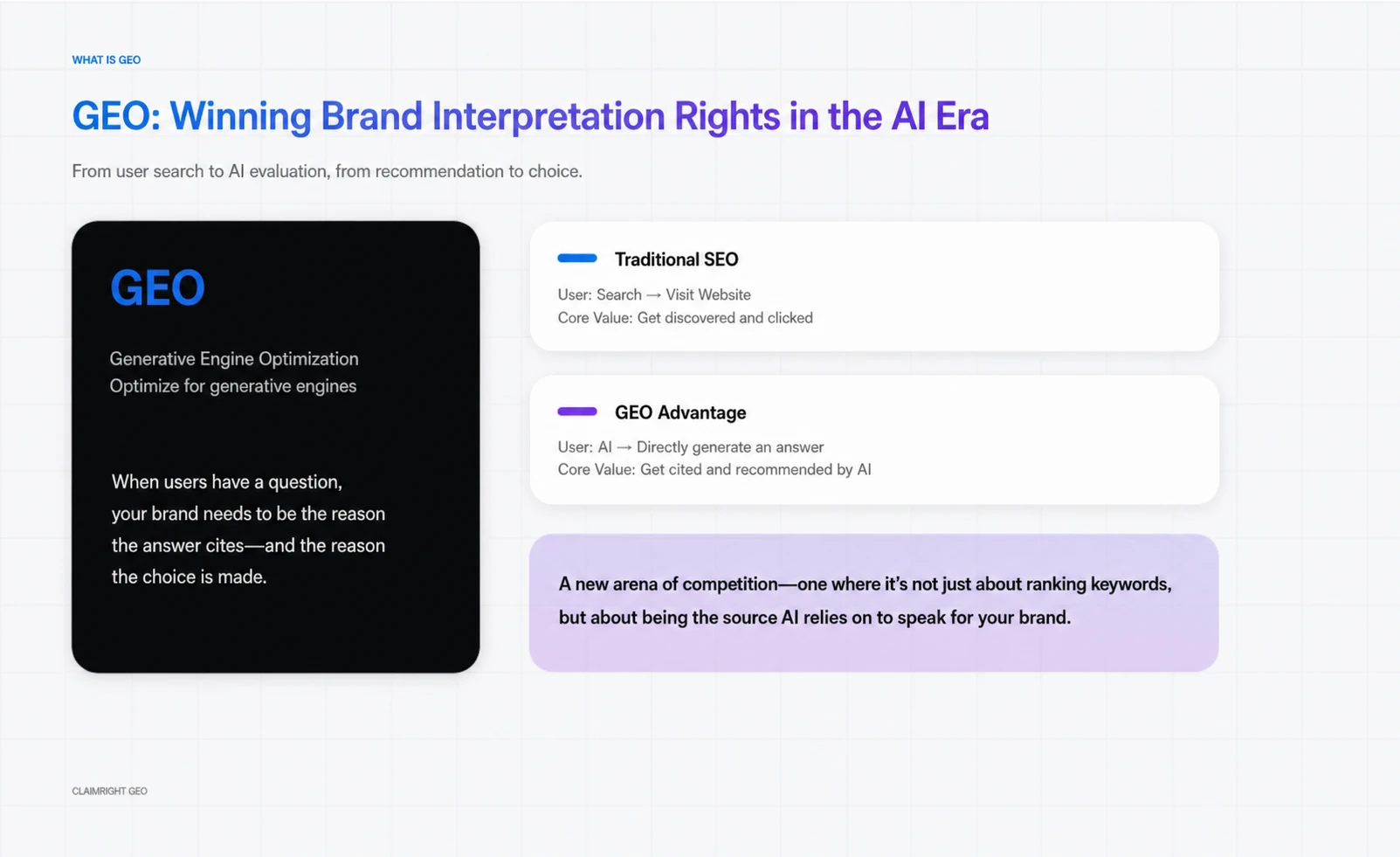
GEO stands for Generative Engine Optimization.
For ClawHunt, it is first and foremost an insight workflow for real business.
The starting point of ClawHunt GEO is the brand decision map. What the customer ultimately receives is a professional judgment that clearly explains what these answers mean.
We work with the customer to break down the target user’s decision process: where the need begins, what the user worries about first, how solutions are compared, and what evidence is required when the brand itself is evaluated. These questions are then grouped into intent clusters at different levels to form a focused research pool.
For example, early-awareness questions ask, “Do I need this?” Solution-comparison questions ask, “How should I choose?” Brand-evaluation questions ask, “Why you?” Transaction-action questions focus on, “What do I do next?”
Each layer has a different meaning—and a different priority—for the brand.
Three steps to understand
your brand’s visibility in AI
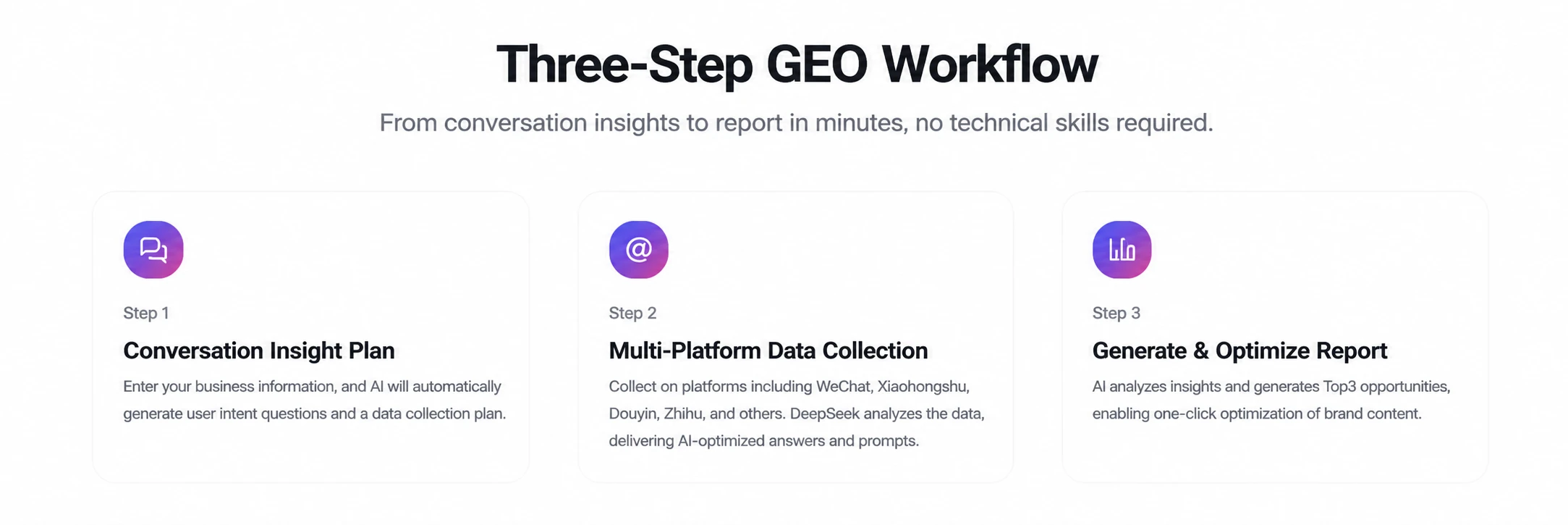
If a consumer brand is absent from transaction-stage questions, it may need better information and conversion entry points. If it is missing from early-awareness questions for a long time, user trust education may not have begun. If it is frequently mentioned but rarely supported with reasons, it needs stronger cases, explanations, and verifiable service details.
These conclusions come from cross-analyzing the user journey, industry context, brand assets, and AI answers. They cannot be derived from a single statement about rank.
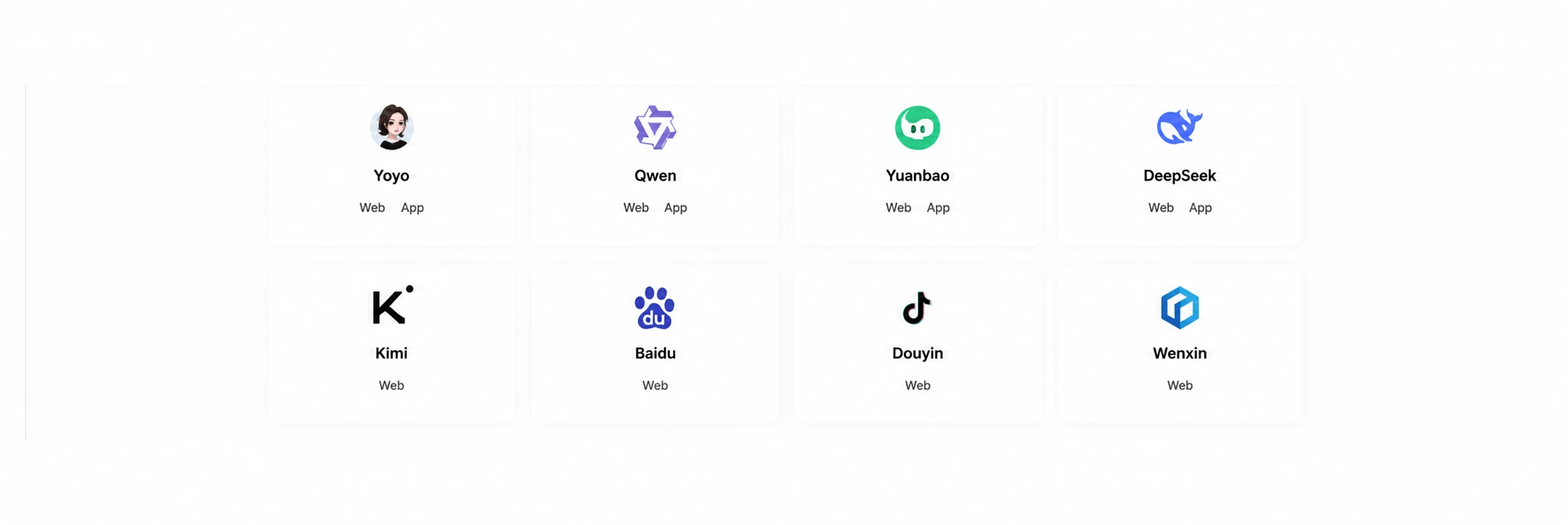
ClawHunt GEO currently supports collection from 12 major Chinese AI endpoints, covering Web and App experiences including Doubao, Qwen, Yuanbao, DeepSeek, Kimi, Baidu AI, Douyin AI, and ERNIE Bot.
covered in one network
Multi-platform collection is only the first layer.
The second layer is a comparable baseline. We continuously track a brand’s exposure in core intent clusters, Top 1 and Top 3 recommendation performance, answer sentiment, recommendation reasons, cited sources, and competitor changes. The customer no longer sees a collection of isolated answers but a moving map of brand visibility.
The third layer is analysis.
Which questions deserve priority? Which content gaps damage trust most? Which platforms are becoming primary entry points? Which competitors appear only occasionally, and which have developed a stable advantage? These judgments require industry knowledge and real business context. Data is good at surfacing signals; a professional team translates those signals into language people can act on.
This is the core service provided by ClawHunt GEO.
The customer receives explainable AI brand insights: where the brand is visible and why; where it remains absent and whether the missing element is content, evidence, channels, or brand expression; and where the next round of content and operating resources should be invested first.
Part 4 | Professional Data Insight Should Help the Team Hold Fewer Pointless Meetings
A ClawHunt GEO report does more than present data. It turns data into decision signals.
A report you can understand at a glance.
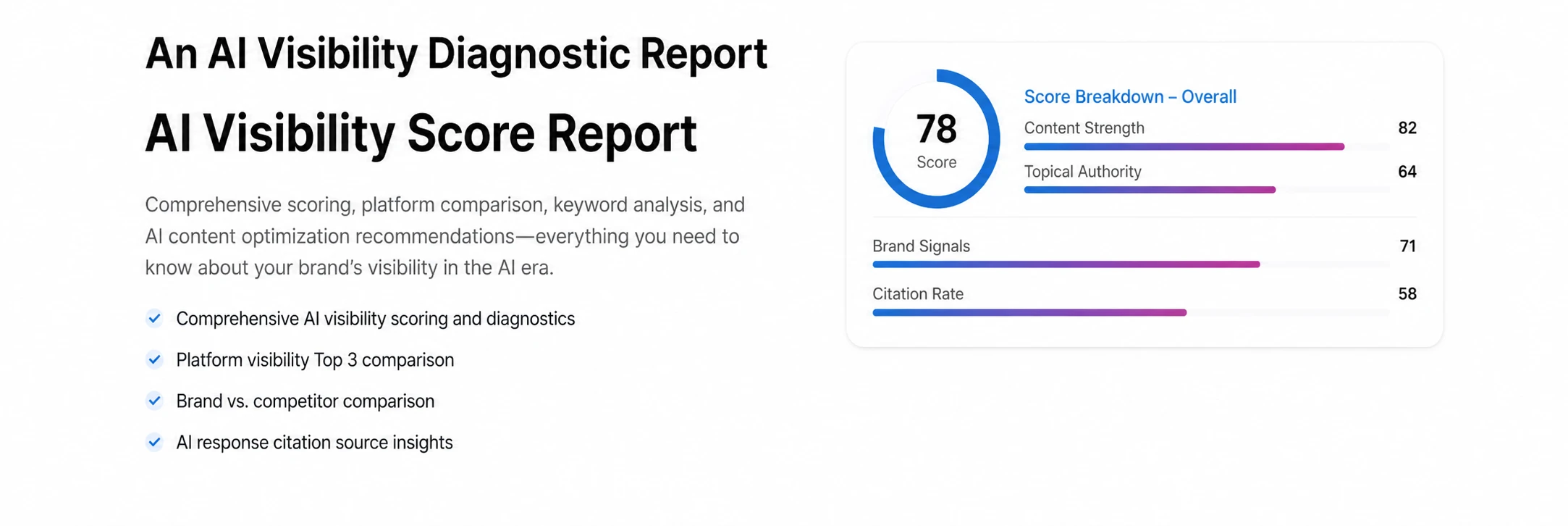
At the brand level, we identify which core scenarios already have visibility, which remain blank, and whether the brand’s role in an answer is a passive mention, an equal nomination, or a reasoned priority recommendation.
At the content level, we observe which types of material AI repeatedly cites: official knowledge pages, professional articles, short videos, community discussions, customer cases, or third-party reviews. Together, these sources form the evidence chain through which AI understands the brand.
At the competitor level, we distinguish occasional exposure from stable advantage. A competitor that appears once may simply have been captured by chance. When it appears repeatedly in the same high-value questions with clearer recommendation reasons, the brand needs to study its content assets and expression structure seriously.
At the action level, we return insights to business priorities: which content needs to be added immediately, which questions require long-term education, which channels deserve more investment, and which existing content should be rewritten, reorganized, or supported with stronger evidence.
The process sounds a little like a doctor reading an examination report.
Temperature, blood pressure, imaging, and laboratory results all matter. But nobody sees ten test sheets and assumes the diagnosis is complete. Where is the problem? How serious is the risk? What should be treated first, and what should be observed later? Those are the answers the customer truly needs.
GEO is the same.
Data collection lets a brand see the phenomenon. Question modeling helps explain it. Professional analysis tells the team what to do next. Remove any one of the three and a report can easily slide from a professional tool into a pretty dashboard.
ClawHunt GEO offers an experience diagnostic that helps brands quickly establish an initial AI-visibility baseline. Teams that need continuous management can enter our managed service, where we handle intent-map design, cross-platform monitoring, anomaly detection, monthly insights, and content-optimization recommendations.
Customers no longer need to ask the same questions manually across different AI platforms every day or search for patterns in dozens of answers. More importantly, they do not have to mistake a business-strategy problem for a data-entry task.
These same monitoring questions come up constantly in our founder and developer community.
Closing Note | Brands Need to Know How AI Speaks on Their Behalf
AI search is becoming a new user entry point, but it will not create credibility from nothing for any brand.
It reads existing content, cases, reviews, discussions, and public information, then assembles those fragments into an apparently complete answer.
If a brand is absent from those materials for a long time, AI can provide only a vague answer. If the brand continuously publishes professional, specific, and current content, AI has a chance to pass that information to the person asking.
That is the meaning of GEO.
For the first time, it lets a brand systematically see what happens after users hand a question to AI: how the brand is described, how competitors are recommended, and where content work should begin.
We are looking for the first consumer brands willing to complete the closed loop of intent modeling, visibility diagnosis, professional data insight, content optimization, and outcome
validation with us.
If you want to see yourself through AI’s eyes,
visit https://clawhunt.store/geo
To build a brand decision map for your own products, talk to the GEO team.
For more information, leave a comment below or message
the ClawHunt official account.